Why Life in the Slow Lane is Better...and Safer
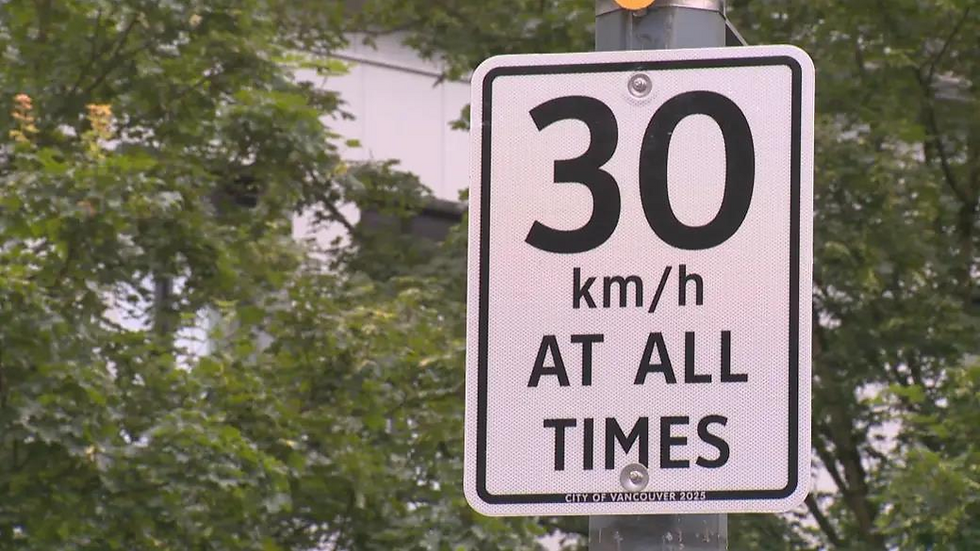
Before I begin this story, I should first confess that I once suffered from a serious affliction – that nasty urban disease known as road rage.
Maybe it was the result of living in Montreal for 20 years - a city where every driver thinks they’re competing on a formula 1 track, and woe betide the driver who doesn’t hit the gas as soon as the light turns green.
In truth, my case of road rage was so bad that my partner – a reasonable, calm type of man – frequently asked me to refrain from expletives directed at other drivers, especially when he was the one behind the wheel.
So, how did I finally overcome my predilection for swearing and fist thumping at all those people I saw as idiots because they drove too slowly, cut me off or made me wait to merge when I unwittingly wound up in an under-construction lane?
Well, funny you should ask, because that’s really what this story is about.
In August 2024, Winnipeg city council made the decision to extend the 30Km speed limit on
Wolseley Avenue from a summertime speed to the all-year-round speed limit. My first
reaction was to feel – how shall I put this? - no small amount of disgruntlement.

But as the weeks went by, something strange happened. Instead of turning onto
Westminster to enter my neighbourhood, I found myself turning down Wolseley. And as
soon as I crossed the light at Maryland St., I could actually feel my shoulders unwind as I
decelerated.
Not only that, when I turned the corner to drive down the street that led home, I didn’t
instantly accelerate. Instead I happily tootled along at 30 kilometers an hour. And in
between maneuvering a slalom course of potholes, I found myself checking out the street I
was driving down – the porches festooned with glow lights, the trees that shaded my way
and the front yard play structures which bespoke the presence of small children.
And that’s when it finally hit me - I actually enjoyed slowing down. I felt calmer and safer,
and I’m pretty confident that everyone around me, including the kids walking home from
school, felt a whole lot safer too.
Likely because I was no longer a red faced menace, hunched over my steering wheel,
bombing down neighbourhood streets in my rush to get home.

And, as it turns out, that relaxed, “all’s right with world” feeling I experienced was no
accident. In fact, the evidence suggests that drivers, and more importantly, the people
around them, are safer in neighbourhoods where the speed limit is 30K.
In fact at speeds of 30 K there’s a less than a 10% chance that a pedestrian or cyclist will be
killed by a collision, while at 50K there’s an 85% chance of death.
So, given that, why are citizens advocating for safer residential speeds being depicted as
radicals and extremists by some city councillors? And why are those councillors apoplectic
at the thought of reduced speeds.
Could it be that they’re afraid that the speed-addicted commuting crowd will kick up a stink
and storm city hall demanding to drive 50K wherever they want?
Or could it be that they themselves suffer from the kind of “get the lead out” hostility I once
suffered from?
More importantly, why is council contemplating reducing residential speeds to only 40K?
Do they really think that a 25% death rate is better than less than 10%. Is this yet more
evidence of a weak-kneed, pre-election council that wants to hold on to power, by
pandering to my onetime brothers and sisters in the “I MUST get there two minutes faster”
crowd.
Honest to whatever gods there be, I just don’t get it. Because as you know, and I know, cars
have very sensitive accelerator pedals, and it’s incredibly easy to suddenly find yourself
doing 60 K in a 50K zone, especially when you’re running the light at an intersection.
And I have the $200 camera-enforced tickets to prove it.
The same is also true when you’re driving 30K. You can hit 40K in the blink of an eye. And if a
kid comes racing into the street after a soccer ball, chances are you won’t be able to stop in
time.
So why not err on the side of caution and set the residential speed at 30 K?
Who knows, you might even discover that you appreciate the chance to slow down and
check out the neighbourhood. And if you’re like me, you might even realize that you’re
incredibly lucky to have gotten away with all those years of impatient, high speed city
driving without killing someone.

The Statistics
1. According to the Manitoba Public Insurance Corp. there were 271 vehicle pedestrian
collisions in 2025, 227 of them in urban areas. Nine were fatal.
2. 78% of those collisions occurred in Winnipeg.
3. There were 470 bike-vehicle collisions in Manitoba in 2025 resulting in 3 fatalities
and 236 injuries.
4. Over a 10-year average, roughly 129 cyclists are injured in urban Manitoba locations
per year, with 88% of those collisions occurring in Winnipeg.
Erna Buffie is a writer and environmental activist. Read about her upcoming book, Out on a


Comments